Optogenetics
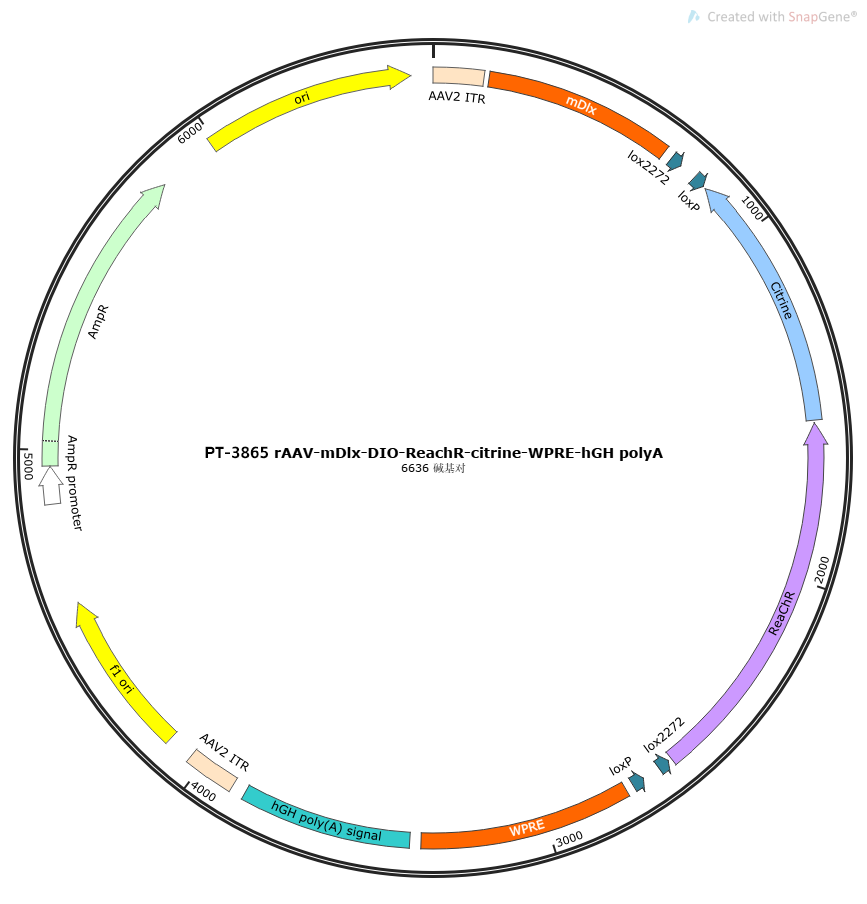
rAAV-hSyn-DIO-opto-D1R-P2A-mCherry-WPRE-hGH polyA
-
opto-D1R
hSyn
Store at -80°C
Delivery Information
Usually Ships in 7 Business Days;
Product Details
Promoter Details
hSyn, human synapsin promoter, mature neuron-specific promoter, 448bp.
Functional Gene Details
opto-D1R has an excitation wavelength of 470-490 nm. When cells are irradiated, the light-sensitive domain in Opto-D1R undergoes conformational changes and activates the Gs protein in the cells. This directly stimulates adenylyl cyclase, causing a rapid increase in intracellular cAMP levels,
Fluorescent Tag
mCherry
Fluorescent Protein Details
mCherry: red fluorescent protein, excitation wavelength 587nm, emission wavelength 610nm.
Application
Optogenetics-mediated regulation of neuronal biochemical signals, Biochemical Modulation uses rAAV viral vectors to express light-sensitive biochemical regulatory proteins in neurons, such as light-sensitive G protein-coupled receptors (Opto-XR), light-sensitive adenylate cyclases (such as bPAC), photosensitive phosphatase, etc., which can specifically regulate the levels of second messengers (such as cAMP, IP3) and downstream signal transduction pathways in neurons, and explore the effects of light-controlled biochemical signals on neuronal function, synaptic plasticity and animal behavior.
Regulatory Element Details
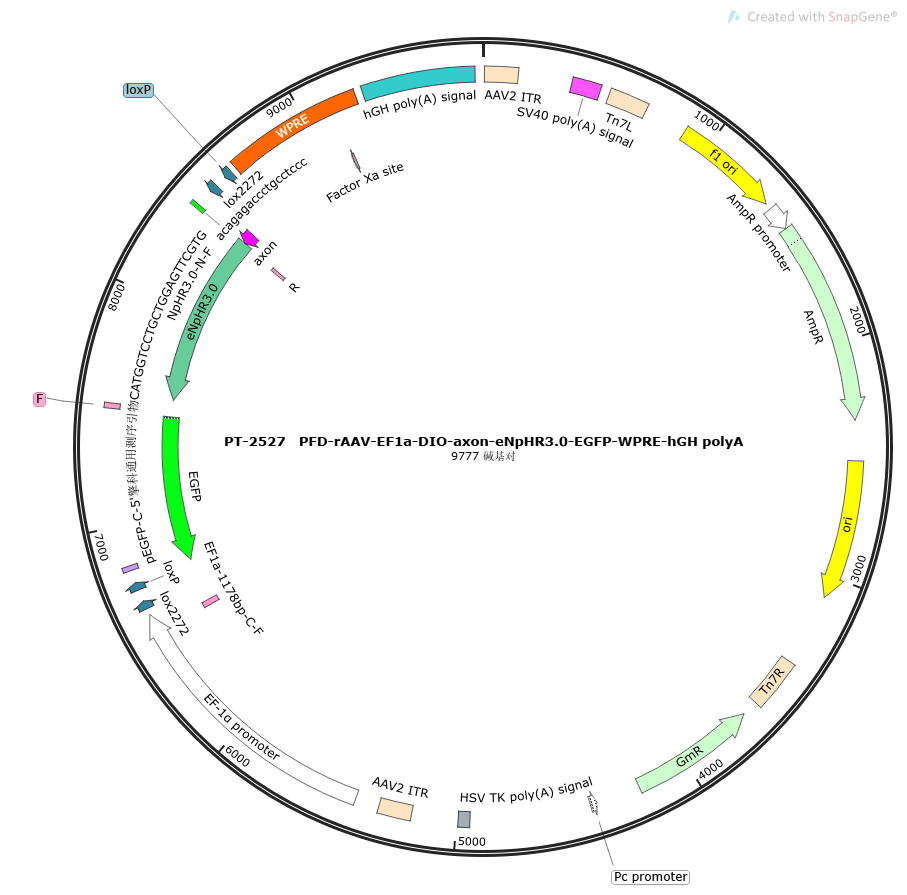
DIO: Double-floxed inverse Orientation, is an element that cooperates with Cre recombinase to control the expression of the target gene. If there is no Cre recombinase, the target gene will not be expressed, but in the presence of Cre, the target gene can be expressed normally. 2A: The 2A sequence is a short peptide sequence. When the ribosome translates it, it will automatically jump away and continue to translate the downstream reading frame, thereby translating the same reading frame into two independent proteins. Used in non-fusion expressions. Commonly used 2A sequences include T2A and P2A.
Notes
1. Short-term storage at 4°C; long-term storage at -80°C
2. It can be stored at -80°C for more than 6 months. Each time it is frozen and thawed, the titer will be reduced by 10%, and repeated freezing and thawing should be avoided; if the virus is stored for more than 6 months, it is recommended to re-measure the virus titer before use
3. According to the experimental needs, the virus can be appropriately diluted and divided into the volume required for each experiment.