End-to-End Closed Loop
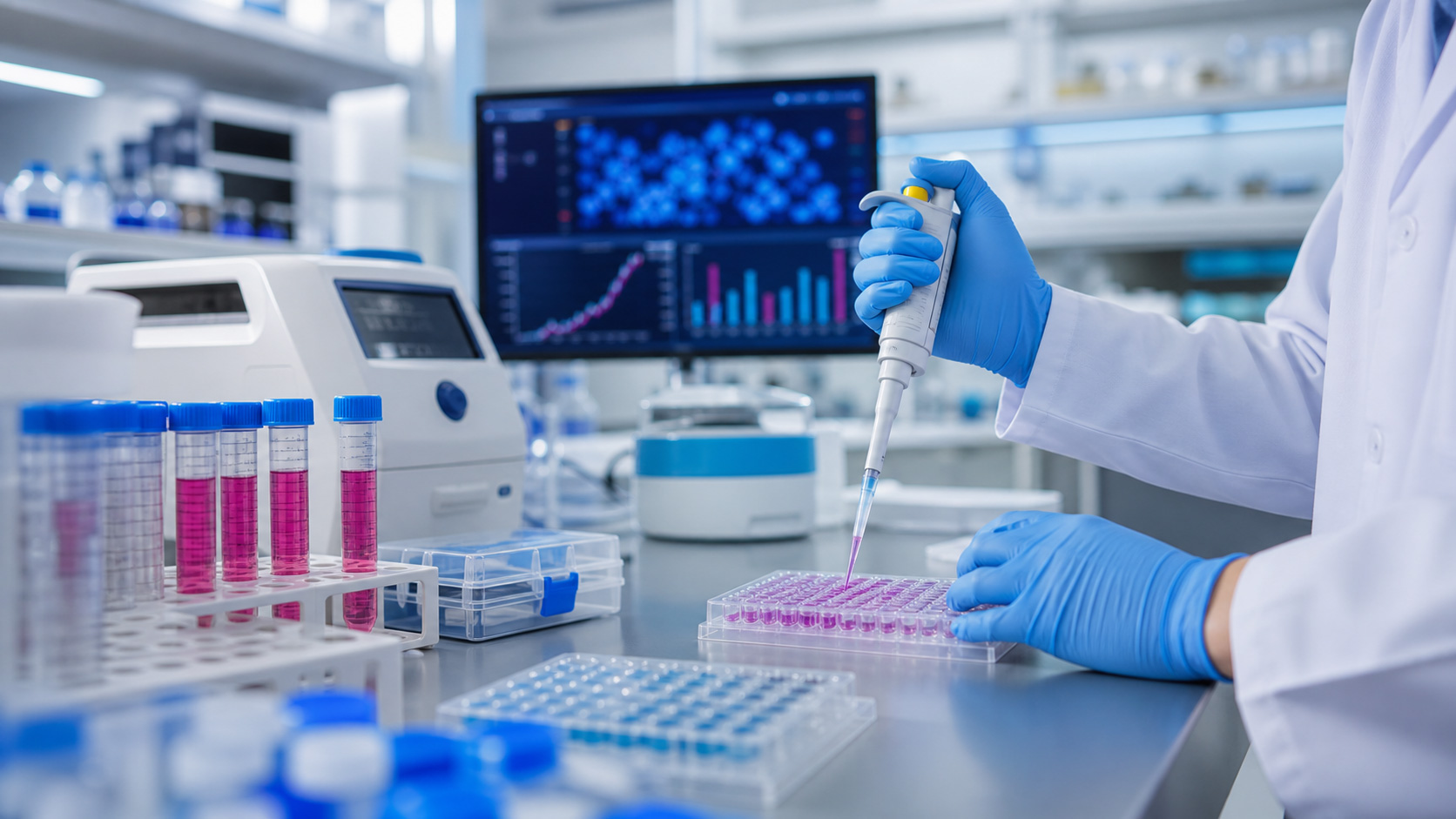
Gene synthesis, expression, purification, affinity testing, functional validation, and specificity screening are completed in one connected platform.
AI Binder Wet-Lab Validation
From AI-designed sequence to functionally validated protein - in one closed-loop platform.
Core Advantages
Crossilico validates AI-designed miniproteins, nanobodies, scFvs, and other binder formats through synthesis, expression, biophysical characterization, cell assays, and off-target screening.
Gene synthesis, expression, purification, affinity testing, functional validation, and specificity screening are completed in one connected platform.
E. coli, yeast, and mammalian expression systems are matched to binder complexity, folding needs, and downstream assay requirements.
Beyond KD measurement, we test cell killing, cytokine release, and activation thresholds to answer whether a binder is usable.
Protein arrays, IHC, and cross-reactivity tests identify specificity risks early and reduce downstream safety failure.
Binder Validation
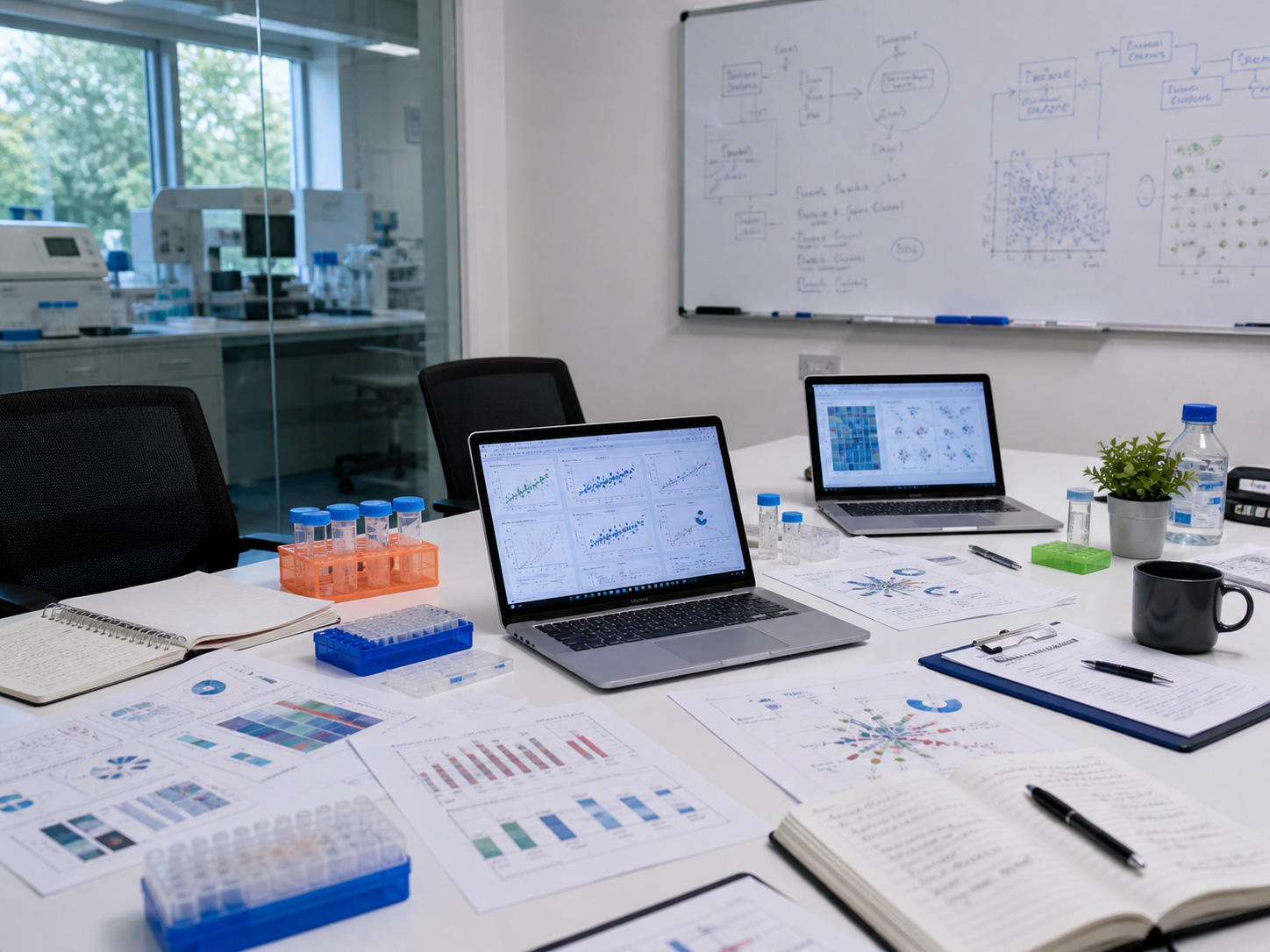
Candidate sequences are tested across expression, purification, affinity, functional, and specificity workflows with data reviewed in context.

Workflow
Teams can run the full closed loop or purchase individual modules such as synthesis plus expression or functional validation only.
Optional project modes: run the complete closed loop, select individual modules, or evaluate 5-20 binder candidates in parallel with standardized batch-to-batch workflows.
Technical Layers
Gene Synthesis Layer
| Capability | Method | Output |
|---|---|---|
| Synthesis feasibility review | Technical team review | Synthesizability report |
| Codon optimization | Expression-system specific optimization | Optimized expression plasmid in GenBank / FASTA |
| Gene synthesis | Standard synthesis plus sequence verification | Sequence-verified expression construct |
| Plasmid construction | Cloning into target expression vector | Transfection- or transformation-ready plasmid |
Expression Layer
| Expression System | Use Case | Advantage |
|---|---|---|
| E. coli | Small binders, miniproteins, scFv formats | Fast, cost-effective, and high-yield. |
| Yeast | Binders with disulfide bonds or moderate folding complexity | Balanced cost and secretion-friendly expression. |
| Mammalian | Complex binders requiring glycosylation or native folding | Closest to physiological state and most reliable for functional assays. |
Purification: affinity chromatography selected by binder tag, such as His-tag or Strep-tag, with SDS-PAGE purity verification target of at least 90%.
Validation Layer
| Test Item | Method | Output | Purpose |
|---|---|---|---|
| Affinity measurement | SPR | KD / Kon / Koff | Precise binding kinetics. |
| Affinity measurement | BLI | KD / Kon / Koff | High-throughput screening. |
| Binding confirmation | ELISA | Binding signal | Rapid target-binding confirmation. |
| Cell killing | LDH / ATP cytotoxicity assay | Killing efficiency percentage | Functional effect validation. |
| Cytokine release | Multiplex cytokine assay | IFN-gamma, TNF-alpha, IL-6 profile | CRS risk evaluation. |
| Activation threshold | Dose-response curve | EC50 | Effective concentration range. |
| Specificity screening | Protein array | Cross-binding profile | Potential off-target discovery. |
| Tissue specificity | IHC | Tissue staining signal | Target tissue specificity validation. |
| Cross-reactivity | Multi-species / multi-target ELISA | Cross-reactivity rate | Species and target cross-reactivity assessment. |
Use Cases
Screen high-affinity, high-specificity, low-immunogenicity binders for in vivo delivery systems and receive off-target safety evidence.
Convert AI-generated candidate sequences into real wet-lab data that can improve models and validate functional potential.
Evaluate 5-20 candidates with standardized workflows and receive an integrated ranking report for GO/NO-GO decisions.
Deliverables
Figures, conclusions, risk notes, and candidate molecule ranking.
Unprocessed experimental reads such as SPR sensorgrams, ELISA OD values, and cell killing assay outputs.
Metadata-tagged outputs that can be imported into computational pipelines.
Before-and-after sequence comparison plus plasmid construction map.
Purified protein sample when requested, priced according to amount and scope.
Protein array results, IHC images, and cross-reactivity analysis.
Optional Extensions
Humanize non-human binders such as nanobodies to reduce immunogenicity risk and improve clinical translation potential.
Scale up selected binders into RUO-grade batches with INVIVO Grade or NHP Grade package options.
Generate large-scale wet-lab datasets for AI teams, including structured binder-function relationship data for model training.
FAQ
Traditional CDMOs focus on how to manufacture. Crossilico focuses on which one to manufacture: we validate AI-designed sequences through wet-lab experiments and deliver functional data that helps select the optimal binder before clinical investment.
We cover miniproteins, nanobodies, scFvs, and other AI-generated binder formats. If your design falls outside these categories, contact us for feasibility assessment.
We prefer the full amino acid sequence of the binder. If you have a partial design or need guidance on formatting, our team can assist during submission.
Full closed-loop validation typically takes 6-10 weeks. Modular services can be faster; for example, gene synthesis plus expression alone typically takes 3-5 weeks.
Yes. We support parallel evaluation of 5-20 candidates with standardized workflows, helping ensure consistent comparison and ranking.
We recommend based on binder characteristics: E. coli for small binders and miniproteins, yeast for disulfide-bond or moderate-complexity binders, and mammalian systems for complex binders requiring glycosylation or native folding.
Standard delivery includes PDF reports, CSV raw data, GenBank/FASTA sequences, and SPR/BLI sensorgram files. Custom JSON with metadata is available upon request.
Start Validation
Submit your candidate sequence for a free feasibility assessment. No obligation.