Integration Site Profiling
Systematically detects AAV vector integration site distribution in the host genome and identifies potentially high-risk genomic regions near oncogenes or tumor suppressors.
Preclinical AAV Safety Validation
Preclinical safety validation for AAV-mediated host genome integration - data-ready for your IND submission.
Core Advantages
Designed for preclinical teams that need integration-site data, risk annotation, and traceable raw sequencing outputs for regulatory and program decisions.
Systematically detects AAV vector integration site distribution in the host genome and identifies potentially high-risk genomic regions near oncogenes or tumor suppressors.
Reports are structured for regulatory safety sections and can support IND preparation with site statistics, genomic annotation, risk conclusions, and method notes.
Embed the assessment into AAV Genome Optimization & Validation or AAV RUO Manufacturing, or order it as an independent safety evaluation.
From raw sequencing data to final safety report, the audit path is preserved. BAM/CRAM files, integration site tables, and visualizations can be delivered together.
Safety Workflow
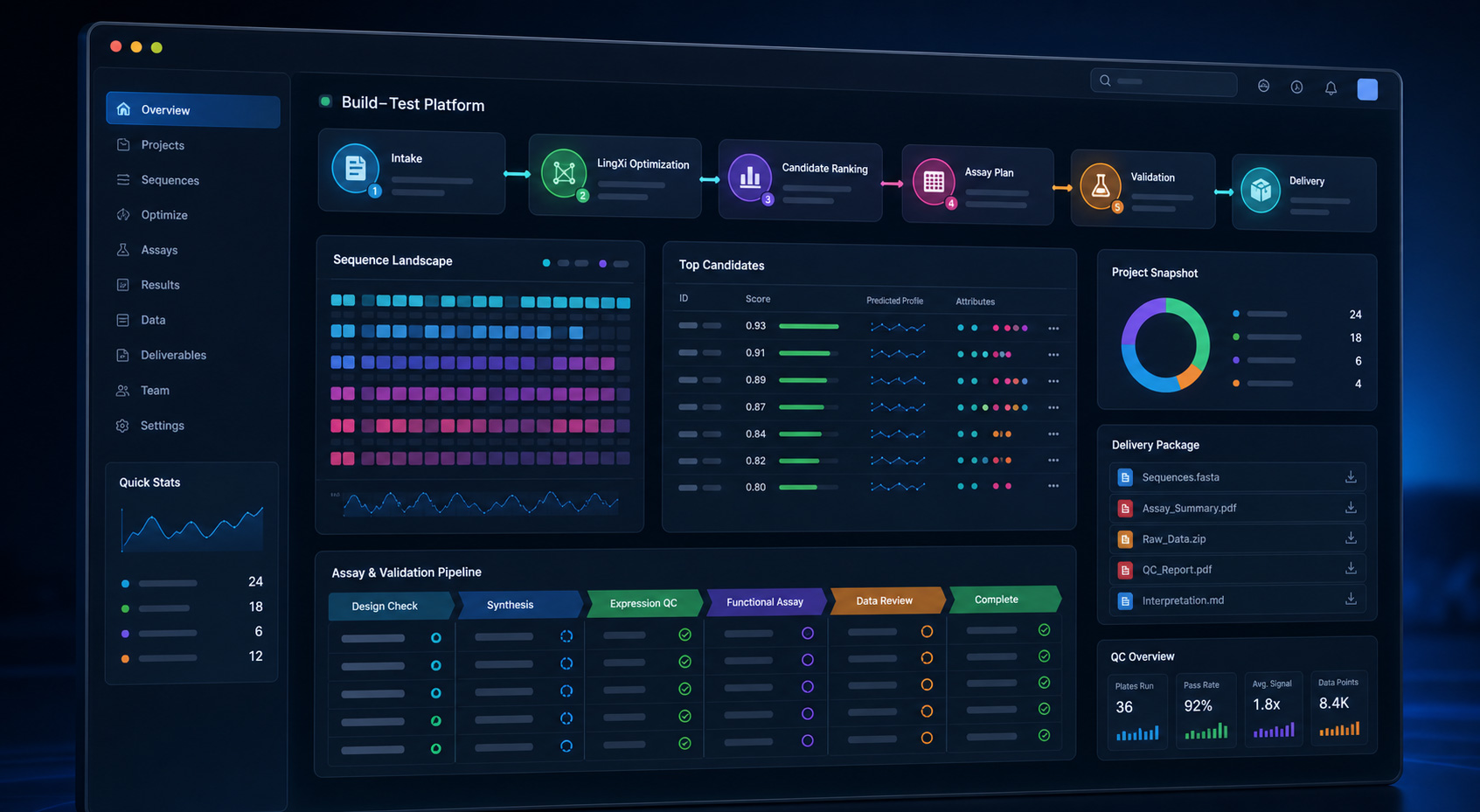
Sequencing-oriented safety projects connect sample context, data processing, genomic annotation, and report review in one traceable path.


Methods & Specifications
The method captures and localizes vector-sequence integration events in host genomic DNA, then annotates the result against reference genomes and safety-relevant genomic features.
Sample Requirements
Matched control material improves background filtering and supports confident interpretation.
| Sample Type | Description | Requirement |
|---|---|---|
| AAV-treated cell or tissue DNA | Genomic DNA extracted from in vitro cells or animal tissues after AAV exposure. | Provide infection conditions, MOI, timepoint, tissue or cell type, and relevant experimental parameters. |
| Matched control sample | Untreated control cell or tissue genomic DNA. | Matched to treated samples for background noise filtering. |
| AAV vector sequence information | Full vector genome sequence from ITR to ITR. | Required to ensure assay specificity and avoid cross-reactivity. |
Sample shipping: customers can ship genomic DNA samples to the Crossilico laboratory through standard cold-chain logistics. Sample status is confirmed within 1 business day after receipt before analysis scheduling begins.
Bioinformatics Analysis
Structured outputs are designed for review, visualization, and downstream regulatory writing.
| Analysis | Output | Description |
|---|---|---|
| Integration site localization | Genomic coordinate list | Precisely localizes integration events in supported reference genomes such as GRCh38 or mm39. |
| Integration frequency estimation | Read count and frequency per site | Estimates relative abundance of detected integration events. |
| Genomic region annotation | Genic, non-genic, and regulatory region distribution | Identifies whether integration sites occur near functional genomic regions. |
| High-risk site screening | Integration list near oncogenes or tumor suppressor genes | Core output for safety risk assessment. |
| Integration preference analysis | Genome-wide bias statistics | Evaluates whether the vector shows sequence or region preferences. |
| Visualization report | Genome circle map and integration distribution figures | Displays genome-wide distribution of integration events for direct review. |
Workflow
The visual structure matches the existing Crossilico service pages while emphasizing sequencing and bioinformatics milestones.
Total timeline: 3-4 weeks after sample confirmation. Rush service can shorten the project to 2-3 weeks when rapid sequencing and accelerated bioinformatics analysis are available.
Deliverables
Integration site statistics, genomic region distribution, high-risk site list, risk conclusions, method description, and limitation statement.
Complete coordinate list with frequency, genomic annotation, gene name, region type, and distance to nearest gene.
Sequencing alignment files suitable for visualization and independent review in genome browsers such as IGV.
Metadata-tagged data for computational pipelines or LIMS import.
Genome circle maps, integration site distribution plots, heatmaps, and region preference statistics.
Report template: the report structure is designed to align with common FDA and EMA IND expectations for gene therapy vector safety data and can be integrated into an IND submission package.
Use Cases
Generate standardized integration site analysis reports that support the safety assessment section of AAV gene therapy IND submissions.
Compare integration risk profiles across candidate AAV vectors, serotypes, or genome designs to support pipeline prioritization.
Extend Crossilico AAV optimization or RUO manufacturing projects with safety data that integrates into the same final report package.
Use Crossilico as an independent third-party lab for objective integration risk evaluation of externally sourced or internally produced AAV vectors.
Build Service Integration
FAQ
While AAV is predominantly non-integrating and often persists as episomal DNA, rare integration events into the host genome have been documented. For regulatory submissions and clinical safety planning, integration profile evidence can be an important part of the safety package.
Standard AAV characterization measures physical vector quality such as titer, purity, and empty/full ratio. Integration risk assessment evaluates a biological safety question: whether and where vector sequences integrate into the host genome.
Yes. If you are already working with us on AAV Genome Optimization or RUO Manufacturing, you can add Integration Risk Assessment before project completion. We recommend adding it during the data assessment phase so safety data can be integrated into the final report.
Yes. We accept samples from any source. You will need to provide the full AAV vector genome sequence and host genomic DNA extracted from AAV-treated cells or tissues, plus relevant infection conditions.
The primary sample is genomic DNA extracted from AAV-infected cells or animal tissues. A matched untreated control sample is needed for background subtraction. If DNA extraction has not been completed, we can provide a protocol.
Yes. The report structure is designed to align with typical gene therapy IND safety data expectations, including integration site distribution, frequency data, genomic annotation, and risk assessment conclusions.
Standard turnaround is 3-5 weeks from confirmed sample receipt. Rush service of 2-3 weeks is available when sequencing and bioinformatics capacity allow.
Standard delivery includes a PDF report, CSV integration site list, BAM or CRAM raw sequencing files, and PNG/PDF visualizations. Custom JSON with metadata is available upon request.
Yes. We can analyze samples from any host species for which a reference genome is available, including mouse, rat, non-human primates, and pig. Contact us to confirm availability for less common species.
Sensitivity depends on sequencing depth, sample quality, and vector design. During project consultation, we assess sensitivity requirements and recommend an appropriate sequencing depth, then state detection limits in the final report.
Start Safety Assessment
Submit your sample details for a free feasibility and project consultation. Standalone or bundled with your AAV project - flexible to your needs.