Optogenetics
rAAV-hSyn-DIO-ChrimsonR-3Flag-WPRE-pA
-
ChrimsonR
hSyn
Store at -80°C
Delivery Information
Usually Ships in 7 Business Days;
Product Details
Promoter Details
hSyn, human synapsin promoter, mature neuron-specific promoter, 448bp.
Functional Gene Details
ChrimsonR: A new type of light-controlled ion channel that can respond to red light around 600nm was discovered through high-throughput sequencing in the Boyden laboratory. A point mutation of K176R was made on the basis of Chrimson (CnChR1), which speeds up the channel closing speed, making it possible to effectively respond to light signals at least 20Hz and below. When used with Chronos, it is possible to control two different neurons with two fluorophores. The excitation light wavelength is 590nm.
Application
Expressing light-sensitive ion channel proteins, such as ChR2, ChrimsonR, etc., in neurons through rAAV viral vectors can specifically excite neurons and explore the effects of light stimulation on neurons, neural circuits and animal behavior.
Regulatory Element Details
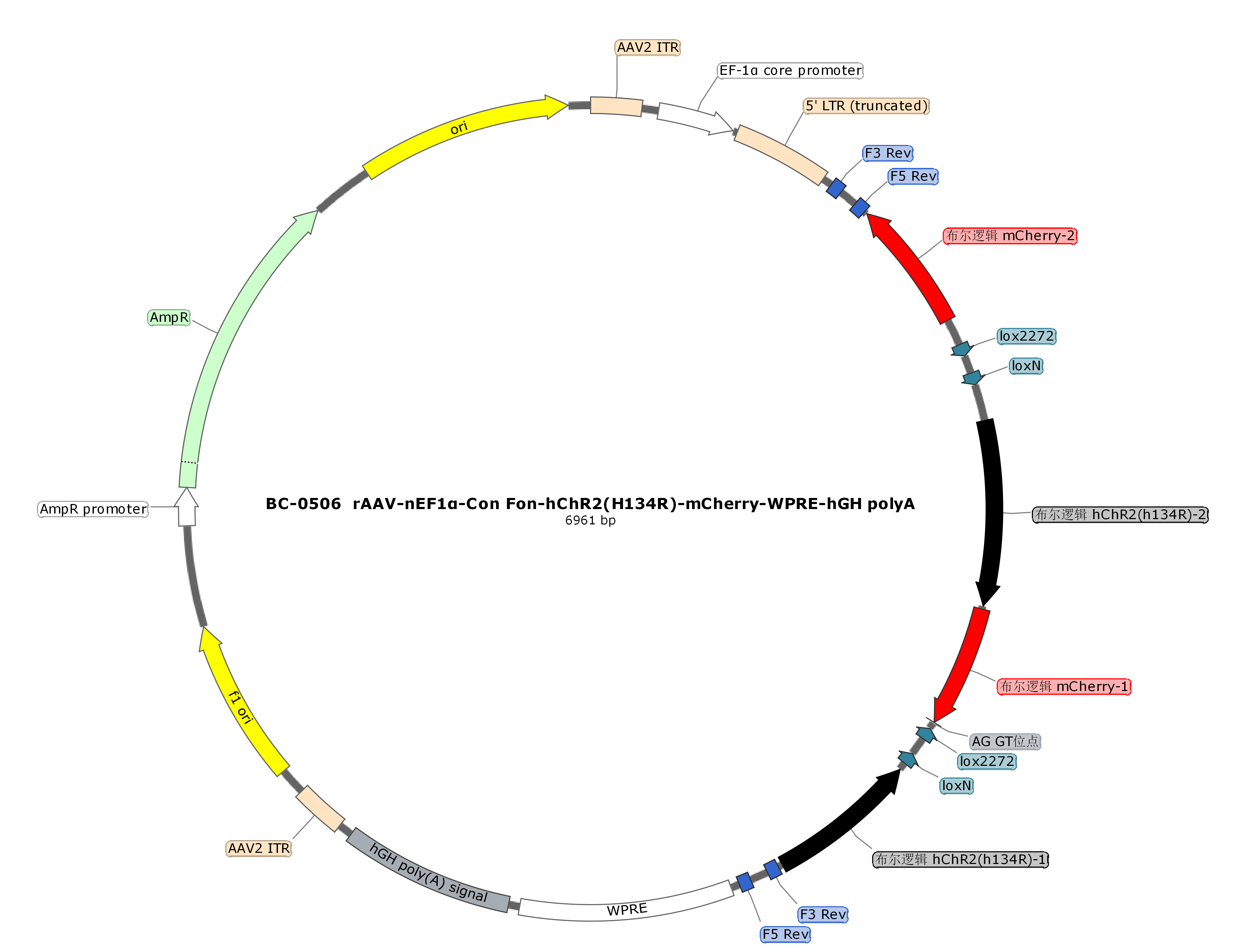
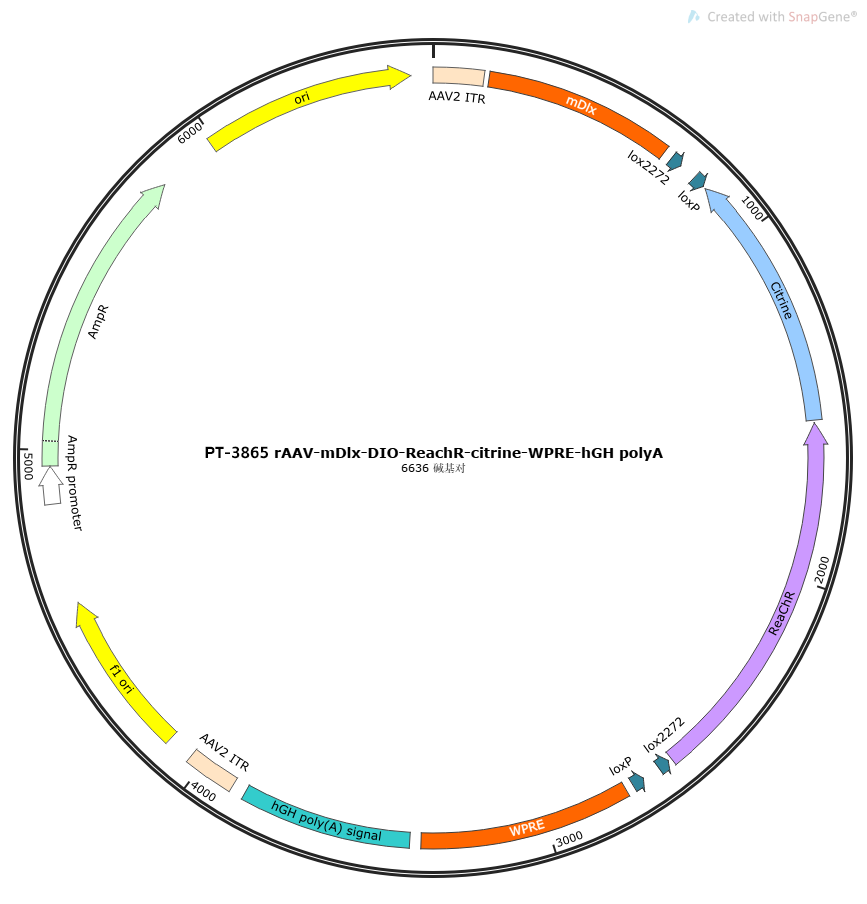
DIO: Double-floxed inverse Orientation, is an element that cooperates with Cre recombinase to control the expression of the target gene. If there is no Cre recombinase, the target gene will not be expressed, but in the presence of Cre, the target gene can be expressed normally.
Tag Details
Flag: The Flag tag protein encodes a hydrophilic polypeptide of 8 amino acids (DYKDDDDK). At the same time, the Kozak sequence constructed in the vector makes the fusion protein with FLAG more efficient in eukaryotic expression systems. The target protein fused to FLAG can be directly purified by non-denaturing affinity chromatography through FLAG to purify the active fusion protein with high purification efficiency. Fusion proteins containing FLAG can also be detected and identified through methods such as Westem Blot and ELSA. FLAG fused to the N-terminus can be cleaved by enterokinase (DDDK) to obtain the specific target protein.
Notes
1. Short-term storage at 4°C; long-term storage at -80°C
2. It can be stored at -80°C for more than 6 months. Each time it is frozen and thawed, the titer will be reduced by 10%, and repeated freezing and thawing should be avoided; if the virus is stored for more than 6 months, it is recommended to re-measure the virus titer before use
3. According to the experimental needs, the virus can be appropriately diluted and divided into the volume required for each experiment.