Calcium Imaging
PFD-rAAV-EF1a-DIO-jRCaMP1a-WPRE-hGH polyA
-
jRCaMP1
EF1α
Store at -80°C
Delivery Information
Usually Ships in 7 Business Days;
Product Details
Promoter Details
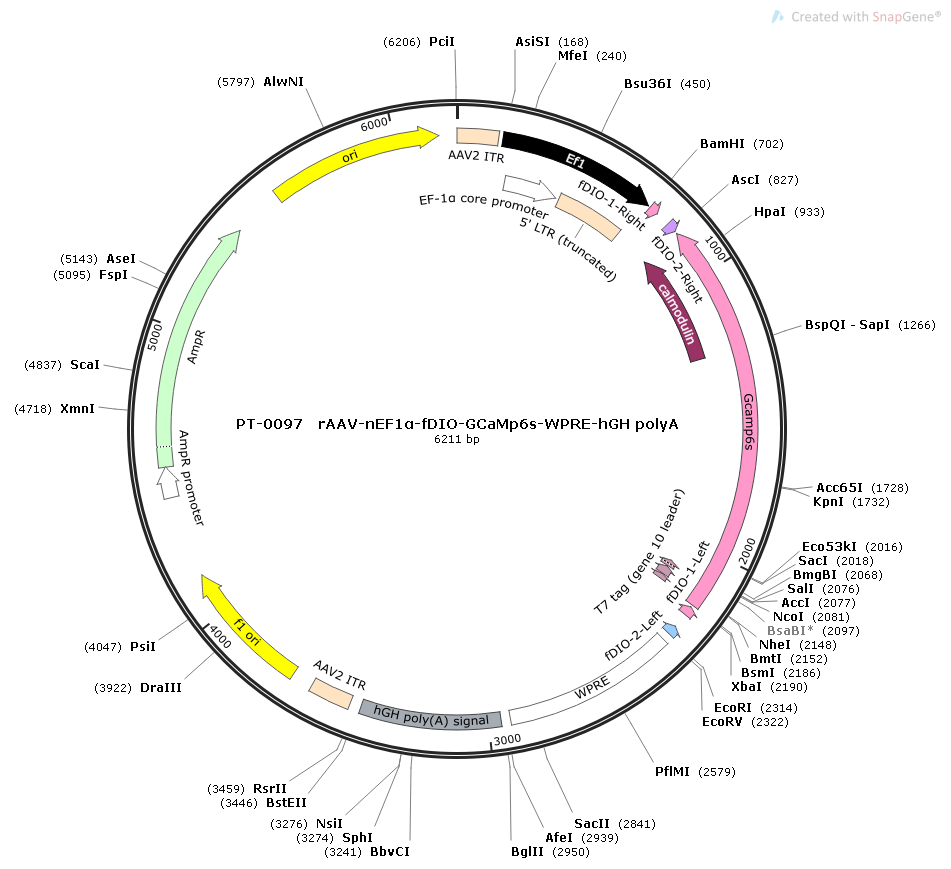
Ef1α, a strong promoter, human targeted elongation factor 1α (EF1A) gene, can be stably expressed in most types of cells, especially cells where the CMV promoter is silenced, such as stem cells, 1178bp.
Functional Gene Details
jRCaMP1: The excitation light wavelength is red-shifted and can be used together with GCaMP. Contains jRCaMP1a, jRCaMP1b2 species.
Application
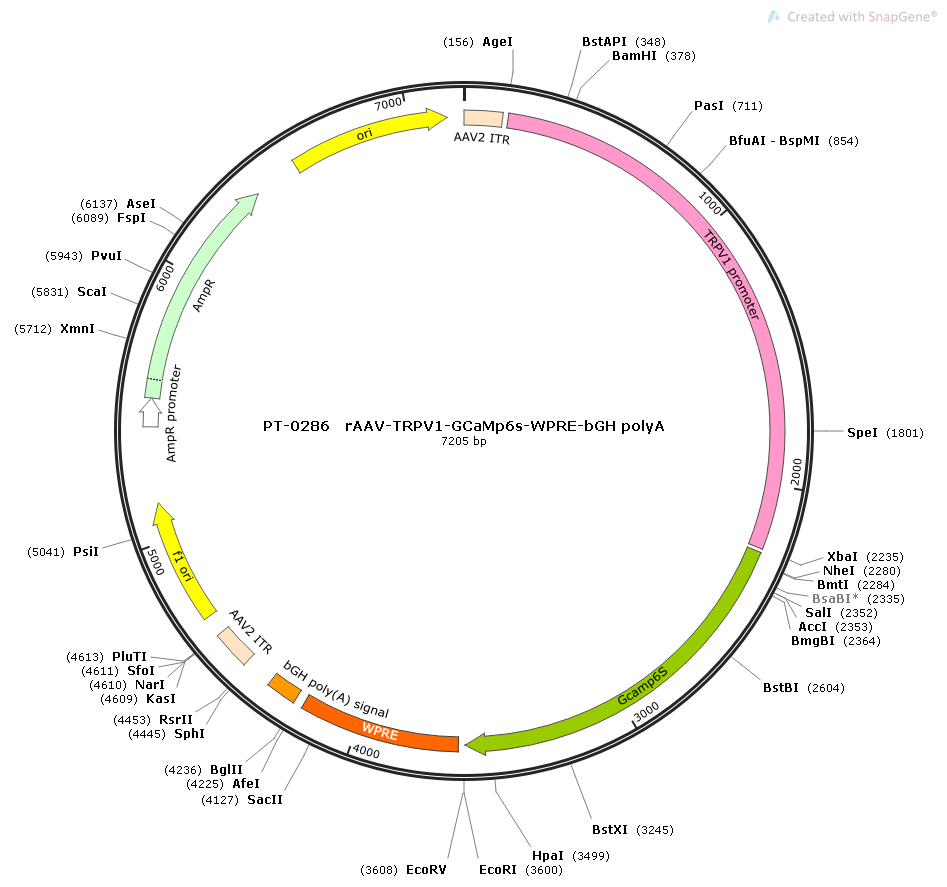
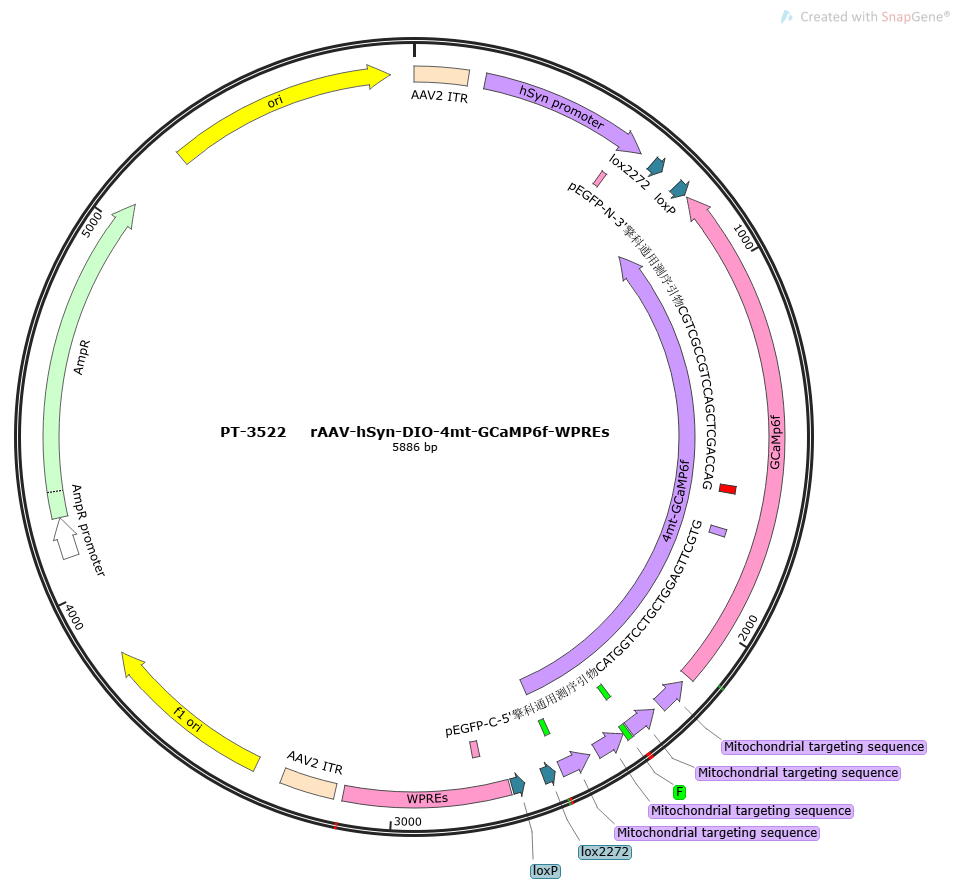
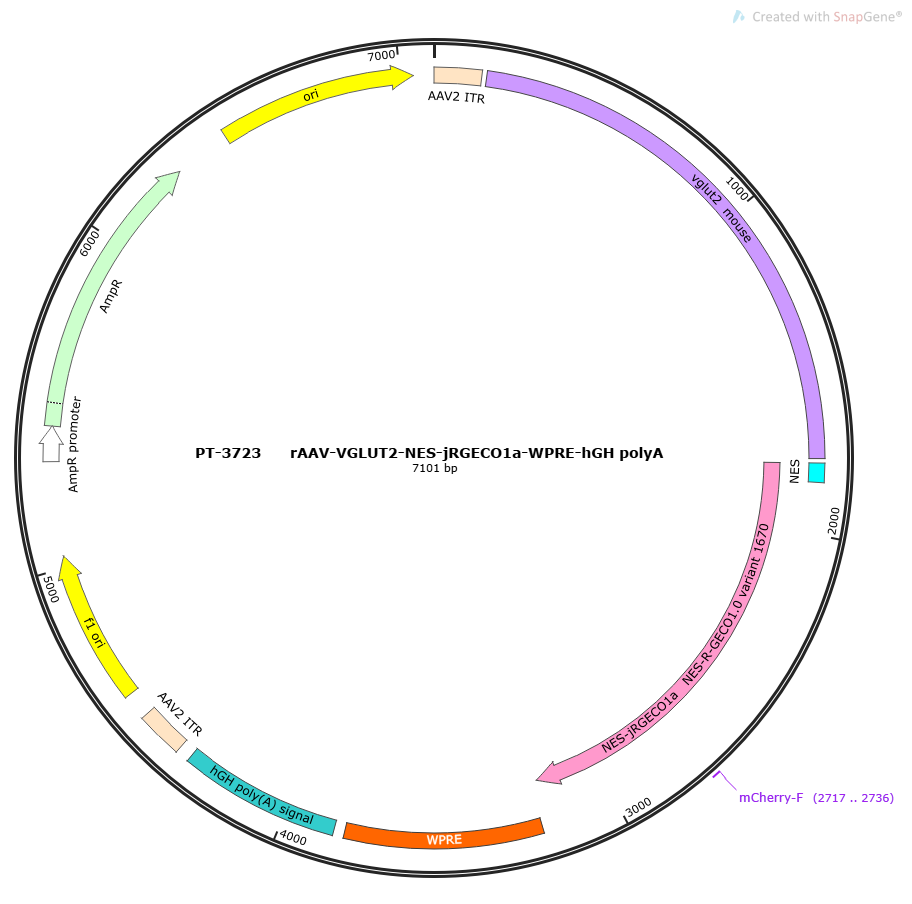
Measuring neuronal activity using genetically encoded calcium indicators (GECIs) has become a widely used method in neuroscience. Calcium imaging with GECIs is often used to measure neural activity in the complete nervous system, such as detecting the activity of a large number of neuronal cell bodies, or tracking the dynamics of neuronal subcells (such as axons, dendrites, and single synapses). Calcium imaging system is a type of optogenetic technology that uses calcium ion indicators that can sense Ca2+ concentration to detect Ca2+ concentration changes in cells or tissues and convert calcium concentration changes into fluorescent signals, thereby converting cell electrical activity into recordable light signals.
Regulatory Element Details
DIO: Double-floxed inverse Orientation, is an element that cooperates with Cre recombinase to control the expression of the target gene. If there is no Cre recombinase, the target gene will not be expressed, but in the presence of Cre, the target gene can be expressed normally.
Notes
1. Short-term storage at 4°C; long-term storage at -80°C
2. It can be stored at -80°C for more than 6 months. Each time it is frozen and thawed, the titer will be reduced by 10%, and repeated freezing and thawing should be avoided; if the virus is stored for more than 6 months, it is recommended to re-measure the virus titer before use
3. According to the experimental needs, the virus can be appropriately diluted and divided into the volume required for each experiment.