Optogenetics
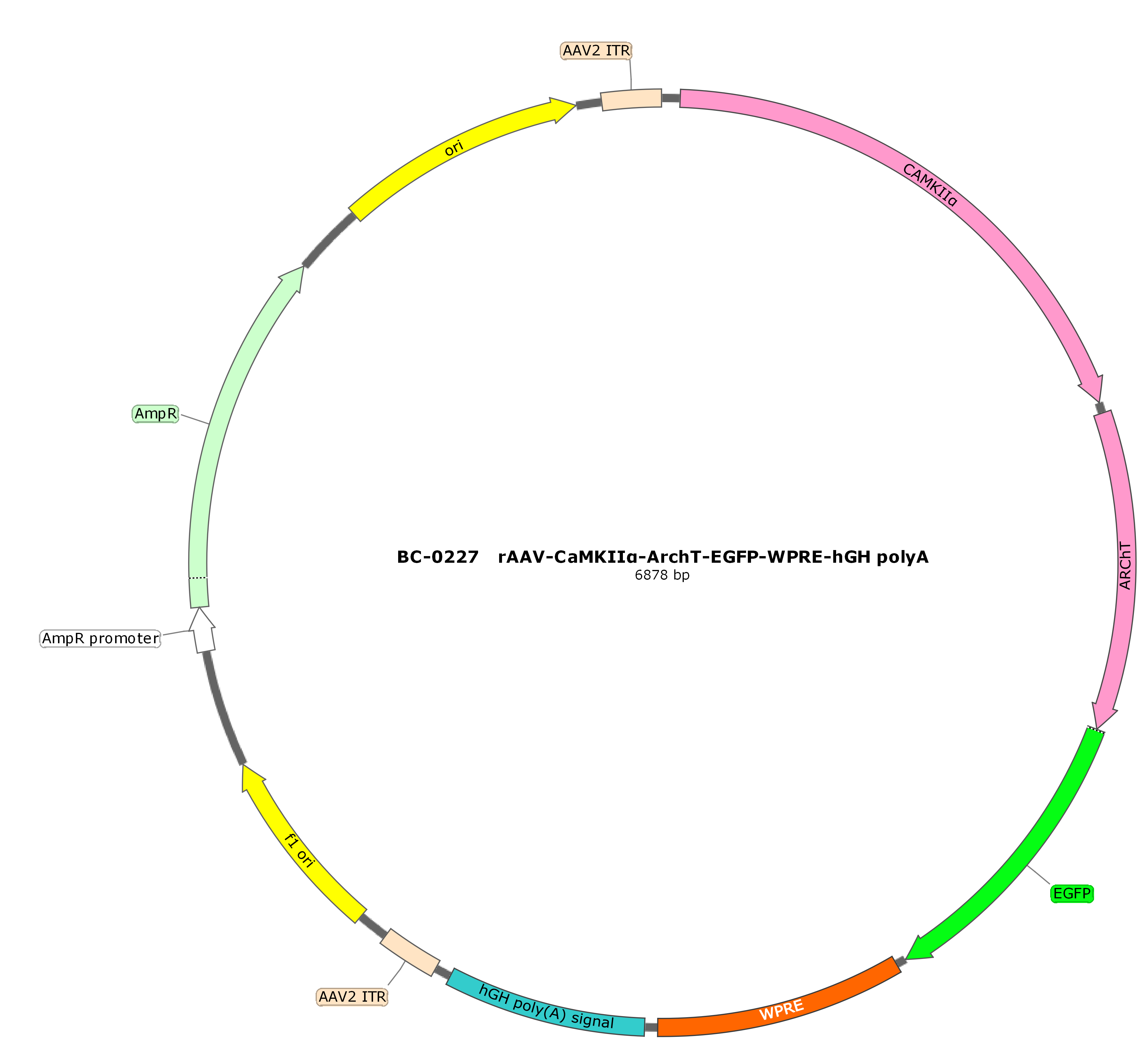
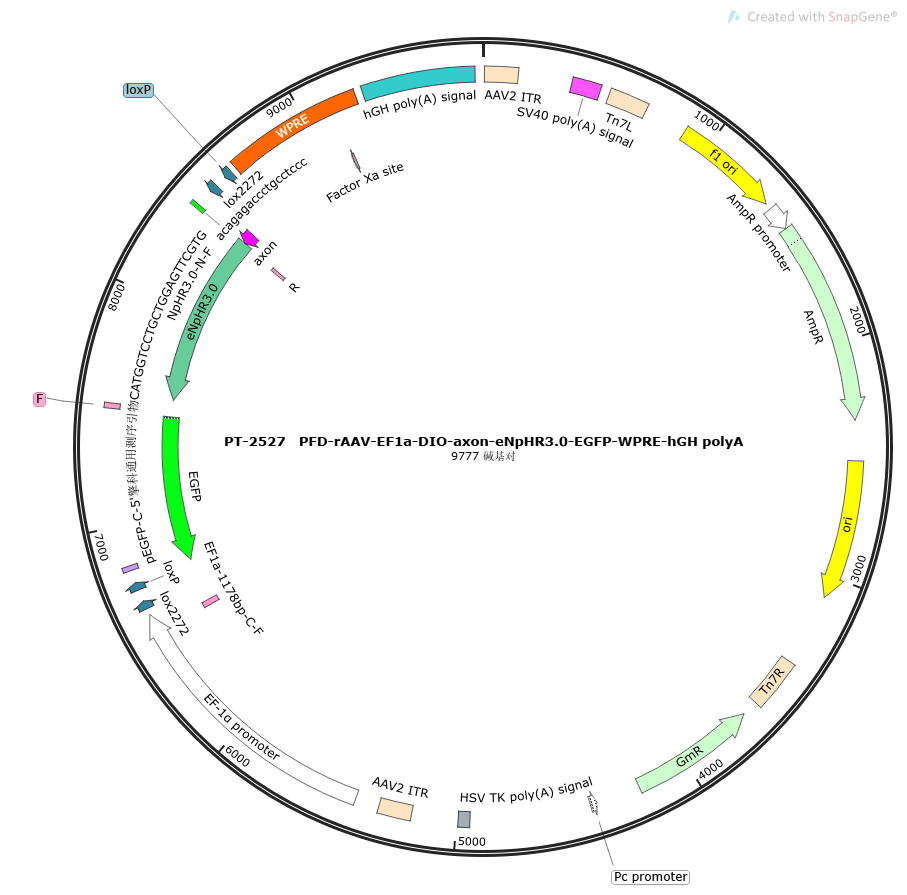
rAAV-CaMKIIa-DIO-eNpHR3.0-mCherry-WPRE-hGH polyA
The excitatory neuron-specific promoter CaMKIIa regulates the expression of Cre-dependent light inhibitory elements. eNpHR3.0-mCherry is expressed in the presence of Cre, but eNpHR3.0-mCherry is not expressed in the absence of Cre.
AAV1, AAV2, AAV5, AAV6, AAV8, AAV9, rh10, DJ, B10, PHP.eB, PHP.S, MaCPNS1/2, retro, anc80l65, Please consult for more serotypes
eNpHR3.0
CaMKIIa
Store at -80°C
Delivery Information
Usually Ships in 7 Business Days;
Product Details
Promoter Details
CaMKIIa, pyramidal neuron/excitatory neuron promoter, 1293 bp.
Functional Gene Details
eNpHR3.0: NpHR is a light-driven chloride ion pump belonging to the Halorhodopsin family. The common version is NpHR3.0, which adds an endoplasmic reticulum anterograde transport signal and a Golgi transport signal to the cell membrane based on NpHR, improving its expression on the cell membrane. It is the most commonly used photoinhibition tool. NpHR is usually driven by yellow light around 570nm and can be used simultaneously with hChR2 (H134R).
Fluorescent Tag
mCherry
Fluorescent Protein Details
mCherry: red fluorescent protein, excitation wavelength 587nm, emission wavelength 610nm.
Virus Type
adeno-associated virus
Application
Expressing light-sensitive ion channel proteins, such as eNpHR3.0, Arch, etc., in neurons through rAAV viral vectors can specifically inhibit neurons and explore the effects of light stimulation on neurons, neural circuits and animal behavior.
Regulatory Element Details
DIO: Double-floxed inverse Orientation, is an element that cooperates with Cre recombinase to control the expression of the target gene. If there is no Cre recombinase, the target gene will not be expressed, but in the presence of Cre, the target gene can be expressed normally.
Notes
1. Short-term storage at 4°C; long-term storage at -80°C
2. It can be stored at -80°C for more than 6 months. Each time it is frozen and thawed, the titer will be reduced by 10%, and repeated freezing and thawing should be avoided; if the virus is stored for more than 6 months, it is recommended to re-measure the virus titer before use
3. According to the experimental needs, the virus can be appropriately diluted and divided into the volume required for each experiment.