Recombinase
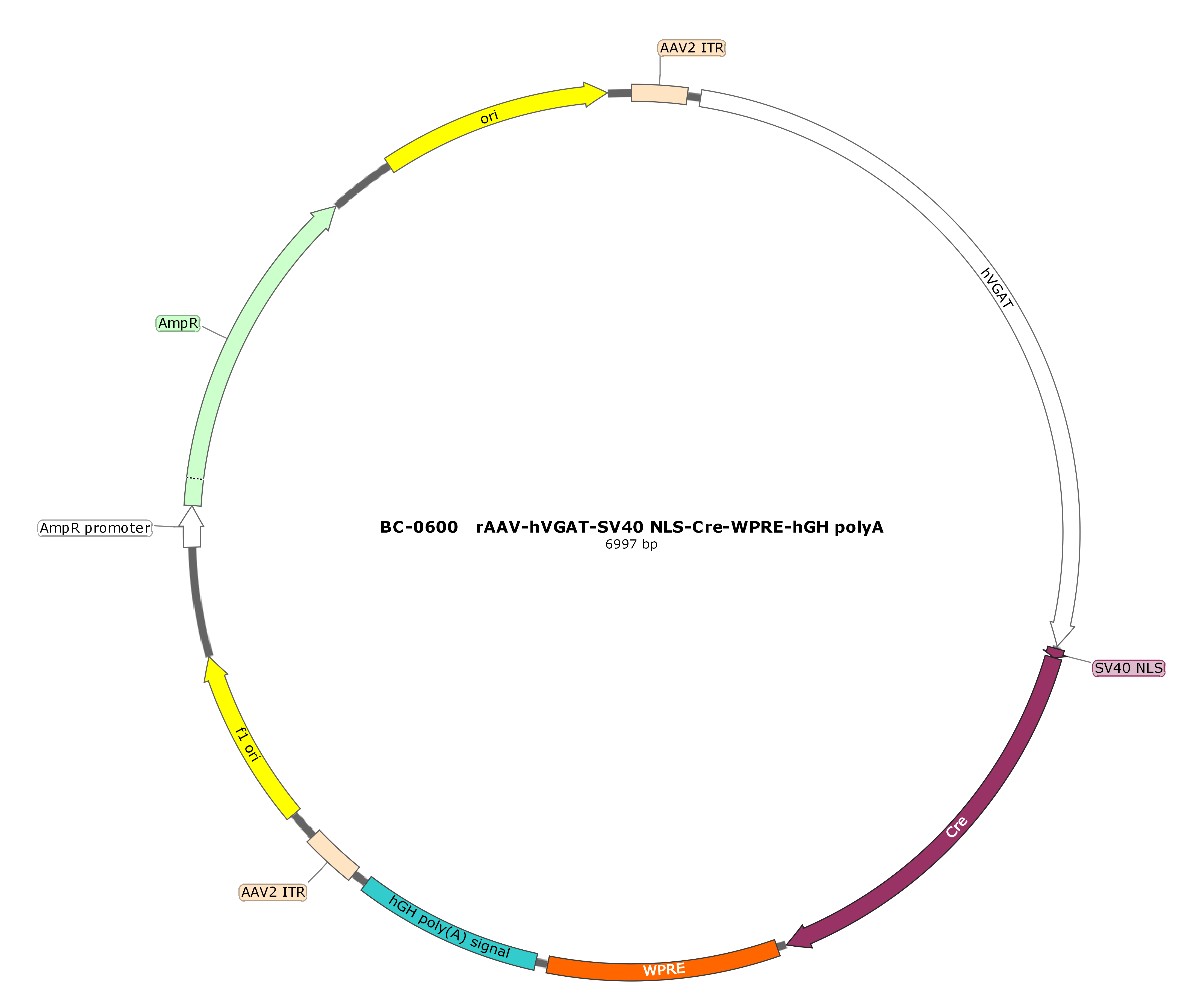
PFD-rAAV-TPH2-CRE-WPRE-hGH polyA
Tryptophan hydroxylase promoter TPH2 regulates the expression of recombinant enzyme CRE
AAV1, AAV2, AAV5, AAV6, AAV8, AAV9, rh10, DJ, B10, PHP.eB, PHP.S, MaCPNS1/2, retro, anc80l65, Please consult for more serotypes
Cre
TPH2
Store at -80°C
Delivery Information
Usually Ships in 7 Business Days;
Product Details
Promoter Details
TPH2, rat tryptophan hydroxylase promoter (serotonin promoter), 2042bp.
Functional Gene Details
Cre: The most commonly used site-specific DNA recombinase, cloned from bacteriophage P1, consists of 343 amino acids. Cre's action site is a 34bp LoxP sequence with a characteristic structure of ATAACTTCGTATA-NNNTANNN-TATACGAAGTTAT. The 13 reverse complementary bases on both sides are Cre's recognition sequences. The middle 8 bases are where recombination occurs. Recombination can only occur if the sequences are the same. N represents a variable base, and different base selections create different LoxP sites. Tissue-specific promoters are used to specifically control the expression of Cre in specific tissues to achieve knockout or transformation of target genes in specific tissue cells. Cre specifically recognizes LoxP sites. If two loxP sites are located on the same DNA strand and in the same direction, Cre recombinase mediates sequence excision between loxPs; if two loxP sites are located on the same DNA strand and in opposite directions, Cre recombinase mediates sequence inversion between loxPs; if two loxP sites are located on different DNA strands or chromosomes, Cre recombinase mediates exchange of two DNA strands or chromosomal translocation.
Virus Type
adeno-associated virus
Application
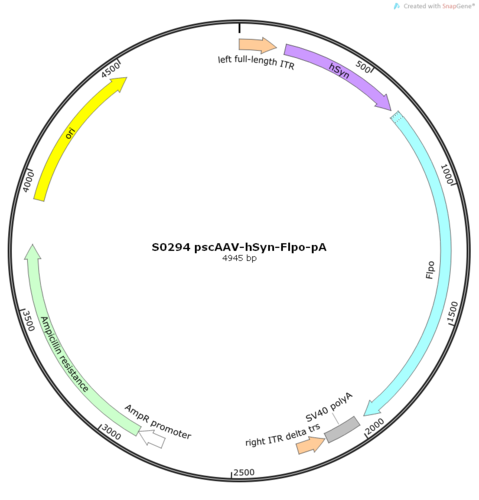
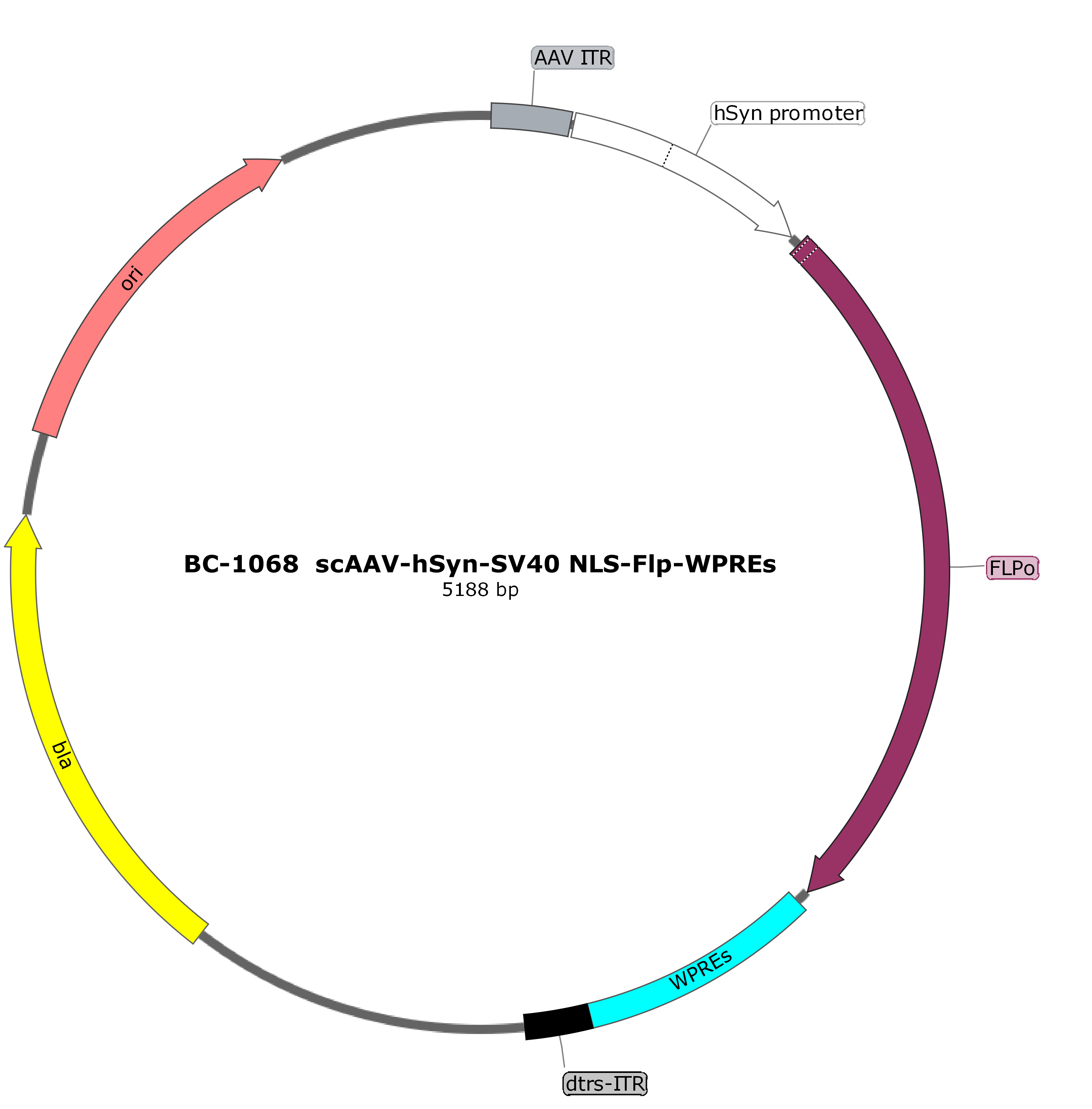
With the help of recombinases (Cre, Flp) that can recognize specific sites, foreign DNA can be manipulated on the genome to achieve gene replacement, inversion, and deletion.
Notes
1. Short-term storage at 4°C; Long-term storage at -80°C
2. Can be stored at -80°C for more than 6 months. Each freeze-thaw will reduce the titer by 10%, and repeated freezing and thawing should be avoided. If the virus is stored for more than 6 months, it is recommended to re-measure the virus titer before use
3. According to experimental needs, the virus can be appropriately diluted and divided into the volume required for each experiment.