Sparse Labeling
BC-SL001 NCSP-YFP-2E5
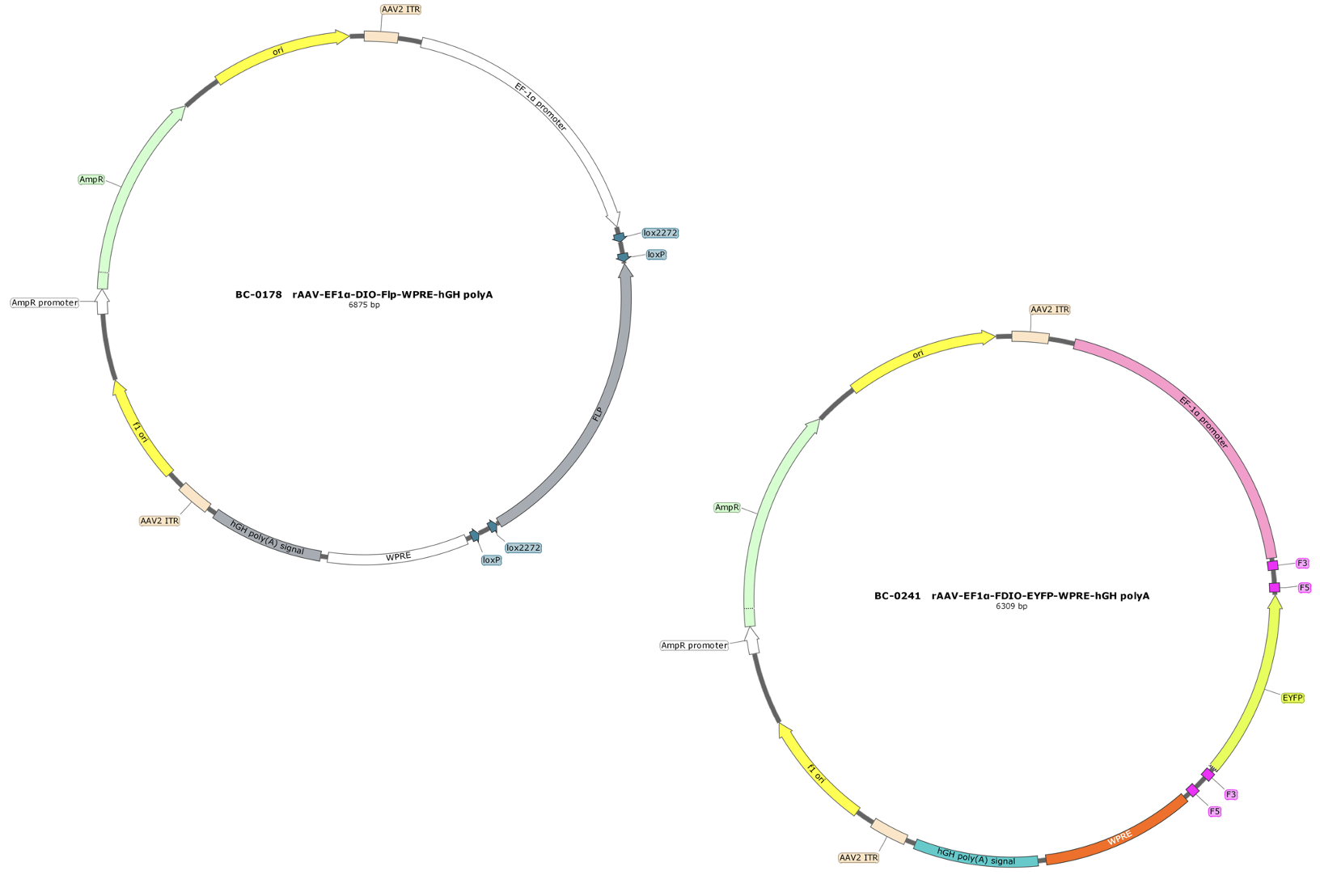
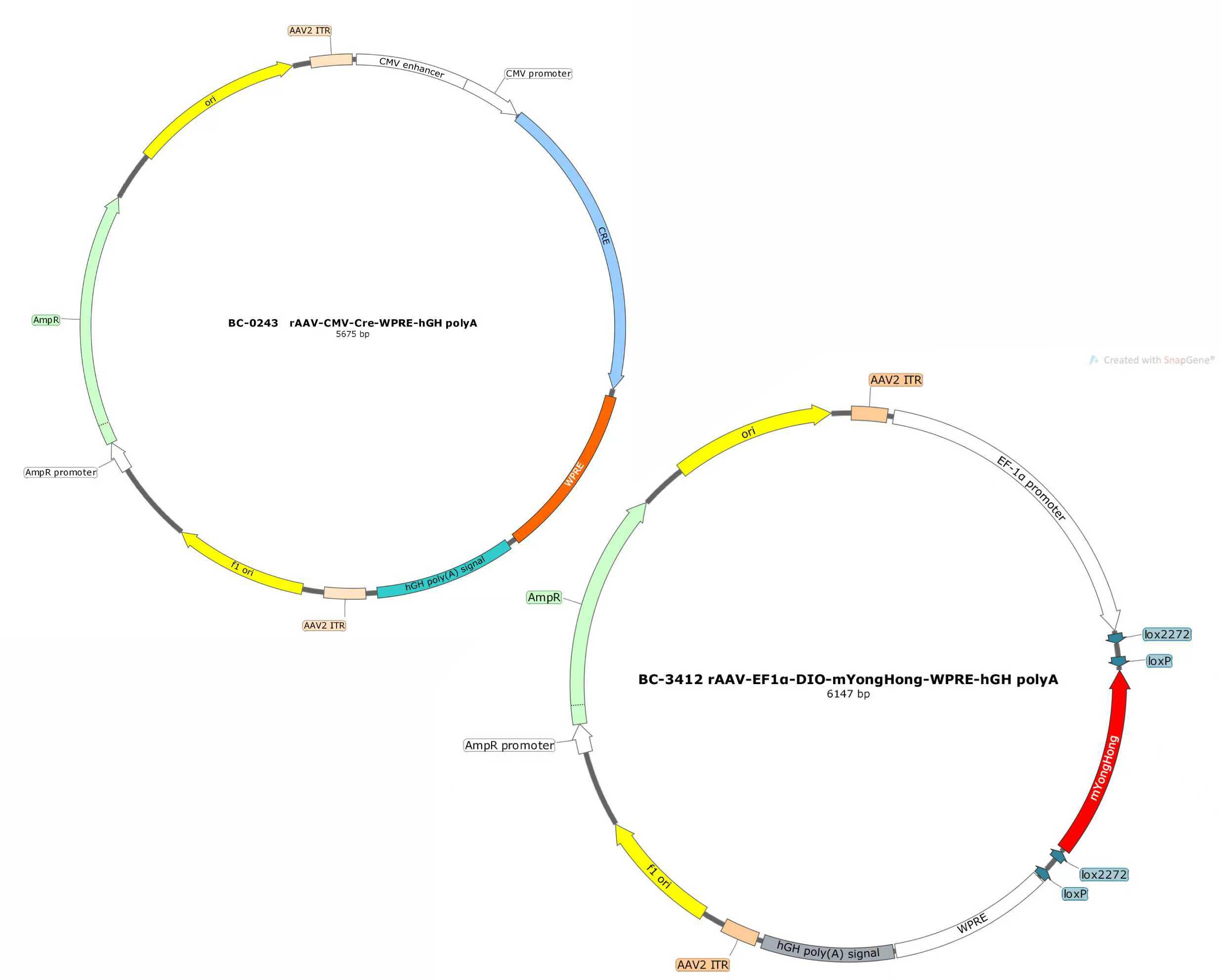
The virus, mixed at a certain ratio of two plasmids (CMV-cre: DIO-EYFP), achieves sparse and bright labeling of neurons, known as Non Cell-Specific Sparse labeling virus. In C57 mice, local injection can label 50-100 neurons.
AAV1, AAV2, AAV3, AAV4, AAV5, AAV6, AAV8, AAV9, retro, AAV11, AAV13, PHP.eB, BR1, B10, MG1.AAV2, olig001, DJ, php.s, 9/retro
EYFP
Broad-spectrum Promoter
Store at -80°C
Delivery Information
Usually Ships in 7 Business Days;
Product Details
Fluorescent Tag
-
Fluorescent Protein Details
mCitrine: yellow fluorescent protein, excitation wavelength 516nm, emission wavelength 529nm. Tag protein: HA: The HA tag protein sequence is YPYDVPDYA, which is derived from the hemagglutinin surface epitope of influenza virus. It has 9 amino acids and has little impact on the spatial structure of the foreign target protein. It is easy to construct a tag protein fused to the N-terminus or C-terminus. Easy to detect with Anti-HA antibody detection and ELISA. IRES: internal ribosome entry site, the Chinese name is the internal ribosome entry sequence, which can be inserted downstream of the CDS region on the mRNA to mediate another CDS region that follows it, thus enabling the expression of two proteins on one mRNA.
References and DOI
Membrane remodeling by FAM92A1 during brain development regulates neuronal morphology, synaptic function, and cognition
Dopamine D1 receptor in orbitofrontal cortex to dorsal striatum
Melatonin Regulates Neuronal Synaptic Plasticity in the Supramammillary Nucleus and Attenuates Methamphetamine-Induced Conditioned Place Preference and Sensitization in Mice
A tau dephosphorylation-targeting chimeraselectively recruits protein phosphatase-1 to ameliorate Alzheimer’s disease and tauopathies
NEK4 modulates circadian fluctuations of emotional behaviors and synaptogenesis in male mice